From 0 to Financial Freedom: How to Do It Today
Steve McKnight (Author)
 (11)
(11)Download: $4.99
(Visit the Hot New Releases in Professional & Technical list for authoritative information on this product's current rank.)

(11)

 (10)
(10)Re-focus your business plan and achieve the success your business deserves
Business owners, and their teams, often lose their way in the midst of the day-to-day stress of generating sales and profits. Whether your goal is selling millions of your product, expanding operations to a new location, or generating more profits, Start at the End offers a unique approach and action steps for business owners and entrepreneurs to redevelop your business plan and achieve ultimate success. You'll learn how to re-create your long-term vision and then make continuous progress in achieving that vision while continuing to hit your short-term goals. Start at the End offers inspiring stories of other entrepreneurs who have achieved significant success in this area, as well as easy-to-follow exercises and next steps.
Start at the End gives business owners a chance to take a step back, re-evaluate your business, and redesign your business plan to achieve the success you dreamed of when you first launched your company.
 50 days in the top 100 (228)
Lord’s classic bestseller, and the definitive account of the unsinkable ship’s fateful last hours

 6 days in the top 100 (34)
Timeless stories from a country veterinarian about the animals and people that shape life in a sleepy English town
 85 days in the top 100
  (119)
(119)"Nate Silver's The Signal and the Noise is The Soul of a New Machine for the 21st century."
—Rachel Maddow, author of Drift
Nate Silver built an innovative system for predicting baseball performance, predicted the 2008 election within a hair’s breadth, and became a national sensation as a blogger—all by the time he was thirty. The New York Times now publishes FiveThirtyEight.com, where Silver is one of the nation’s most influential political forecasters.
Drawing on his own groundbreaking work, Silver examines the world of prediction, investigating how we can distinguish a true signal from a universe of noisy data. Most predictions fail, often at great cost to society, because most of us have a poor understanding of probability and uncertainty. Both experts and laypeople mistake more confident predictions for more accurate ones. But overconfidence is often the reason for failure. If our appreciation of uncertainty improves, our predictions can get better too. This is the “prediction paradox”: The more humility we have about our ability to make predictions, the more successful we can be in planning for the future.
In keeping with his own aim to seek truth from data, Silver visits the most successful forecasters in a range of areas, from hurricanes to baseball, from the poker table to the stock market, from Capitol Hill to the NBA. He explains and evaluates how these forecasters think and what bonds they share. What lies behind their success? Are they good—or just lucky? What patterns have they unraveled? And are their forecasts really right? He explores unanticipated commonalities and exposes unexpected juxtapositions. And sometimes, it is not so much how good a prediction is in an absolute sense that matters but how good it is relative to the competition. In other cases, prediction is still a very rudimentary—and dangerous—science.
Silver observes that the most accurate forecasters tend to have a superior command of probability, and they tend to be both humble and hardworking. They distinguish the predictable from the unpredictable, and they notice a thousand little details that lead them closer to the truth. Because of their appreciation of probability, they can distinguish the signal from the noise.
With everything from the health of the global economy to our ability to fight terrorism dependent on the quality of our predictions, Nate Silver’s insights are an essential read.
 | |
| Up to 20% Off Select Sony Home Audio Products | |
| Expires Dec 2, 2012 |
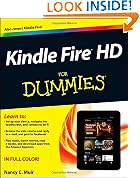 (3)
(3)Movies, apps, games, e-books, and more - enjoy them all on the hottest device in town - the Kindle Fire HD!
From its stunning color touchscreen to its ultrafast speed, the Kindle Fire HD is sparking everyone's interest. This full-color guide will have you blazing through the web, staying entertained with the latest apps and games, watching your favorite TV shows and movies, and, of course, reading magazines, newspapers, and books to indulge all your interests. Whether this is your first tablet or you're upgrading from another device, you'll get to know your Kindle Fire HD and rekindle your love of reading with Kindle Fire HD For Dummies!
Light 'er up and unleash the fun with Kindle Fire HD For Dummies!
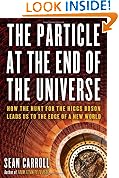 (4)
(4)Scientists have just announced an historic discovery on a par with the splitting of the atom: the Higgs boson, the key to understanding why mass exists has been found. In The Particle at the End of the Universe, Caltech physicist and acclaimed writer Sean Carroll takes readers behind the scenes of the Large Hadron Collider at CERN to meet the scientists and explain this landmark event.
The Higgs boson is the particle that more than six thousand scientists have been looking for using the Large Hadron Collider, the world’s largest and highest energy particle accelerator, which lies in a tunnel 17 miles in circumference, as deep as 575 feet beneath the Franco-Swiss border near Geneva. It took ten years to build and this search has now cost over $9 billion and required the collaboration of engineers from more than one hundred countries.
What is so special about the Higgs boson? We didn’t really know for sure if anything at the subatomic level had any mass at all until we found it. The fact is, while we have now essentially solved the mass puzzle, there are things we didn’t predict and possibilities we haven’t yet dreamed. A doorway is opening into the mind boggling, somewhat frightening world of dark matter. We only discovered the electron just over a hundred years ago and considering where that took us—from nuclear energy to quantum computing--the inventions that will result from the Higgs discovery will be world-changing.
The Particle at the End of the Universe not only explains the importance of the Higgs boson but also the Large Hadron Collider project itself. Projects this big don’t happen without a certain amount of conniving, dealing, and occasional skullduggery— and Sean Carroll explores it all. This is an irresistible story (including characters now set to win the Nobel Prize among other glories) about the greatest scientific achievement of our time.
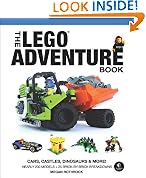 (12)
(12)Unleash your imagination as you journey through the wide-ranging world of LEGO building with The LEGO Adventure Book. This inspiring tour is filled with bright visuals, step-by-step breakdowns of 25 models, and nearly 200 example models from the world's best builders. Learn to build robots, trains, medieval villages, spaceships, airplanes, and much more. Whether you're brand-new to LEGO or have been building for years, this book is sure to spark your imagination and motivate you to keep creating!
 | |
| Save up to 74% on select Wolo vehicle horns through December 3, 2012, while supplies last. | |
| Expires Dec 4, 2012 |
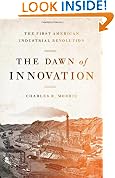 (1)
(1)In the thirty years after the Civil War, the United States blew by Great Britain to become the greatest economic power in world history. That is a well-known period in history, when titans like Andrew Carnegie, John D. Rockefeller, and J.P. Morgan walked the earth.
But as Charles R. Morris shows us, the platform for that spectacular growth spurt was built in the first half of the century. By the 1820s, America was already the world’s most productive manufacturer, and the most intensely commercialized society in history. The War of 1812 jumpstarted the great New England cotton mills, the iron centers in Connecticut and Pennsylvania, and the forges around the Great Lakes. In the decade after the War, the Midwest was opened by entrepreneurs. In this beautifully illustrated book, Morris paints a vivid panorama of a new nation buzzing with the work of creation. He also points out the parallels and differences in the nineteenth century American/British standoff and that between China and America today.

 5 days in the top 100 (18)
UnAwesome is UnAcceptable.
The Book of Business Awesome is designed as two short books put together—one read from the front and the other read from the back when flipped over. Covering key business concepts related to marketing, branding, human resources, public relations, social media, and customer service, The Book of Business Awesome includes case studies of successful businesses that gained exposure through being awesome and effective. This book provides actionable tools enabling readers to apply the concepts immediately to their own businesses. The flip side of the book, The Book of Business UnAwesome, shares the train-wreck stories of unsuccessful businesses and showcases what not to do.
Ensure that your business remains awesome, instead of unawesome, and apply these awesomely effective strategies to your business today.
 | |
| Amazing range, superior noise isolation, and the smallest, most ergonomic design Lift Audio has ever produced. Micro series packs in every advantage of the in-ear design, and improves on it without sacrificing the rich and satisfying sound of bulkier, more expensive headphones. | |
| Expires Nov 19, 2012 |
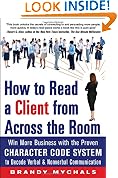 (7)
(7)How to Read a Client from Across the Room gives you the clues and tools to get someone to say "yes" to you--in an instant--by tailoring your communication methods on the fly to suit that person’s character type.
"A quick and powerful method for understanding the very essence of your prospective client. Watch your referrals and bank account grow." -- Bob Burg, coauthor of The Go-Giver and author of Endless Referrals
"Brandy Mychals has created a system that allows you to connect with potential clients, serve their core needs, and create lucrative win-win solutions. Without question, this sales book is a must-read!" -- Sandra Yancey, CEO and founder, eWomenNetwork, and bestselling author of Succeeding in Spite of Everything
"This book will help you understand people in ways you never thought possible. Practice Mychals's techniques and you'll rise to the top of your field in no time." -- Dr. Daniel J. Reidenberg, PsyD, FAPA, BCPC, CRS, CMT, Executive Director, SAVE, and Chair, Advisory Board, American Psychotherapy Association
"This book unlocks the secrets of connecting to and persuading more people, more quickly. In today's fast-paced world, a book like this is pure gold." -- Robert G. Allen, author of the New York Times bestseller, The One Minute Millionaire
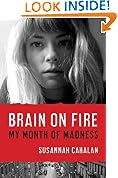 (3)
(3)One day in 2009, twenty-four-year-old Susannah Cahalan woke up alone in a strange hospital room, strapped to her bed, under guard, and unable to move or speak. A wristband marked her as a “flight risk,” and her medical records—chronicling a monthlong hospital stay of which she had no memory at all—showed hallucinations, violence, and dangerous instability. Only weeks earlier, Susannah had been on the threshold of a new, adult life: a healthy, ambitious college grad a few months into her first serious relationship and a promising career as a cub reporter at a major New York newspaper. Who was the stranger who had taken over her body? What was happening to her mind? In this swift and breathtaking narrative, Susannah tells the astonishing true story of her inexplicable descent into madness and the brilliant, lifesaving diagnosis that nearly didn’t happen. A team of doctors would spend a month—and more than a million dollars—trying desperately to pin down a medical explanation for what had gone wrong. Meanwhile, as the days passed and her family, boyfriend, and friends helplessly stood watch by her bed, she began to move inexorably through psychosis into catatonia and, ultimately, toward death. Yet even as this period nearly tore her family apart, it offered an extraordinary testament to their faith in Susannah and their refusal to let her go. Then, at the last minute, celebrated neurologist Souhel Najjar joined her team and, with the help of a lucky, ingenious test, saved her life. He recognized the symptoms of a newly discovered autoimmune disorder in which the body attacks the brain, a disease now thought to be tied to both schizophrenia and autism, and perhaps the root of “demonic possessions” throughout history. Far more than simply a riveting read and a crackling medical mystery, Brain on Fire is the powerful account of one woman’s struggle to recapture her identity and to rediscover herself among the fragments left behind. Using all her considerable journalistic skills, and building from hospital records and surveillance video, interviews with family and friends, and excerpts from the deeply moving journal her father kept during her illness, Susannah pieces together the story of her “lost month” to write an unforgettable memoir about memory and identity, faith and love. It is an important, profoundly compelling tale of survival and perseverance that is destined to become a classic.
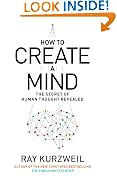
The bold futurist and bestselling author explores the limitless potential of reverse-engineering the human brain
Ray Kurzweil is arguably today’s most influential—and often controversial—futurist. In How to Create a Mind, Kurzweil presents a provocative exploration of the most important project in human-machine civilization—reverse engineering the brain to understand precisely how it works and using that knowledge to create even more intelligent machines.
Kurzweil discusses how the brain functions, how the mind emerges from the brain, and the implications of vastly increasing the powers of our intelligence in addressing the world’s problems. He thoughtfully examines emotional and moral intelligence and the origins of consciousness and envisions the radical possibilities of our merging with the intelligent technology we are creating.
Certain to be one of the most widely discussed and debated science books of the year, How to Create a Mind is sure to take its place alongside Kurzweil’s previous classics.
 4 days in the top 100 (132)
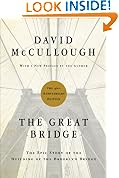
This monumental book is the enthralling story of one of the greatest events in our nation's history, during the Age of Optimism -- a period when Americans were convinced in their hearts that all things were possible. In the years around 1870, when the project was first undertaken, the concept of building an unprecedented bridge to span the East River between the great cities of Manhattan and Brooklyn required a vision and determination comparable to that which went into the building of the great cathedrals. Throughout the fourteen years of its construction, the odds against the successful completion of the bridge seemed staggering. Bodies were crushed and broken, lives lost, political empires fell, and surges of public emotion constantly threatened the project. But this is not merely the saga of an engineering miracle; it is a sweeping narrative of the social climate of the time and of the heroes and rascals who had a hand in either constructing or exploiting the surpassing enterprise.
